Computer Science Tuition Online for University Students
Computer Science degree courses: data structures and algorithms, discrete mathematics, computer architecture, operating systems, databases, networks and theory of computation.

Founder & Head of School, Afterkelas
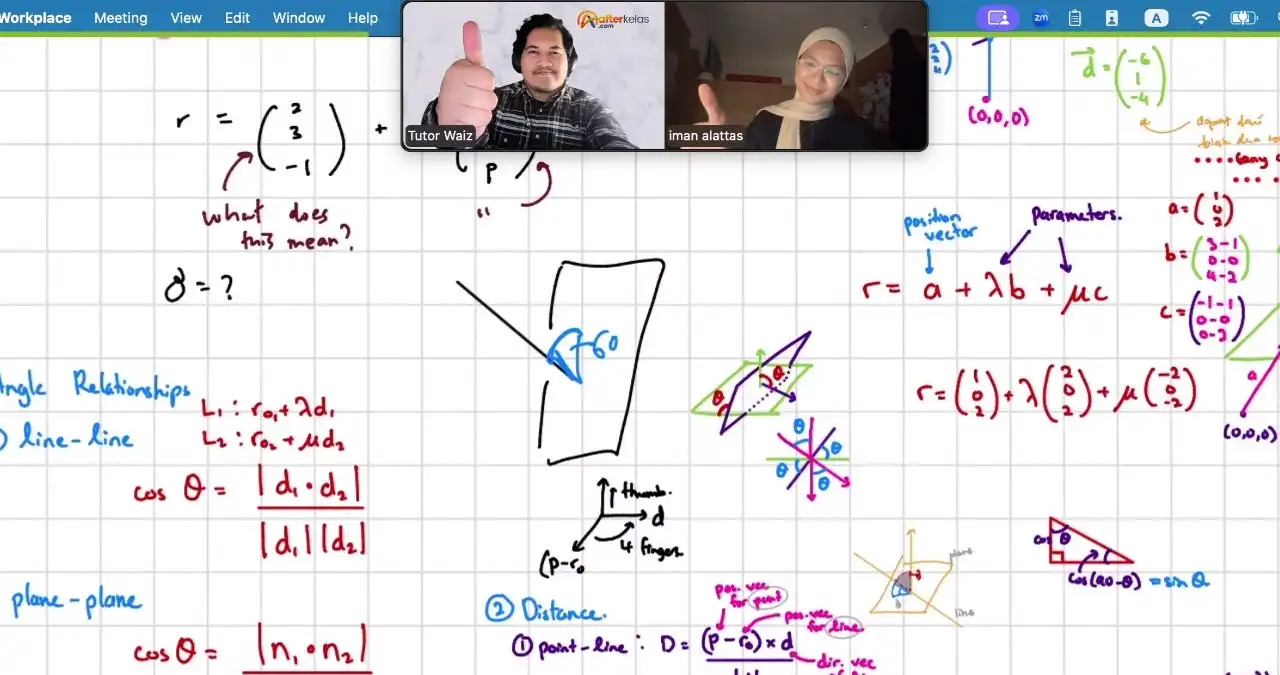
Afterkelas tutors computer science online for university students in the core courses of a computing degree. Tutors run live classes, 1-to-1 or in small groups, on data structures, algorithms, discrete mathematics and the systems courses, following the student's own course.
What computer science degree courses cover
The core areas of a computer science degree. Each university arranges them into its own courses, so the tutor works from your course outline.
Core areas
10 topics- Data structures: lists, stacks, queues, trees, graphs and hash tables
- Algorithms: searching, sorting and complexity
- Discrete mathematics: logic, sets, relations and proof
- Computer organisation and architecture
- Operating systems
- Databases and SQL
- Computer networks
- Software engineering
- Theory of computation
- Information security
The core of a computing degree
Beyond programming, a computer science degree rests on a few core courses: data structures and algorithms, discrete mathematics, how computers and operating systems work, databases, networks and the theory of computation. They are more abstract than programming, and they are where many computing students meet proofs and complexity analysis for the first time.
Where marks are lost
Algorithm questions lose marks when the student describes code instead of analysing it: stating the complexity, justifying it and comparing approaches. Discrete mathematics loses marks to proofs with gaps. Tutors practise both with short, exam-style problems like the worked one below.
Assignments are your own
Coding assignments, database projects and reports are assessed as the student's own work. A tutor explains the concepts and works through similar problems, but does not write any part of assessed work.
A question, worked through
An algorithms question on binary search, and why its complexity is logarithmic.
Question
A sorted array holds 1,000,000 numbers. At most how many comparisons does binary search need to find a value, or to show it is absent? How does that compare with linear search?
- Each comparison halves the part of the array still in play.
- After k comparisons at most 1,000,000 ÷ 2ᵏ items remain, so the worst case is the smallest k with 2ᵏ ≥ 1,000,000.
- 2¹⁹ = 524,288 is too small and 2²⁰ = 1,048,576 is enough, so k = 20.
- Linear search may need all 1,000,000 comparisons: O(n) against O(log n).
Answer At most 20 comparisons, against up to 1,000,000 for linear search.
Frequently asked questions
Which computer science courses do you teach?
The core courses: data structures and algorithms, discrete mathematics, computer architecture, operating systems, databases, networks and theory of computation. The tutor follows your course outline.
I am good at programming but struggle with discrete mathematics. Can you help?
Yes. Discrete mathematics asks for proofs and precise definitions, which take regular practice with feedback, and tutoring gives that practice.
When should Computer Science tuition start?
Early in the semester, since data structures and discrete mathematics build week by week and later courses assume them.
How much does Computer Science tuition cost?
The fee depends on the format (1-to-1 or a small group), how many classes a week and the tutor, so there is no single figure. Send an academic advisor the university, the course code and the course outline on WhatsApp, and you will get the current packages and a quote, usually within one working day.